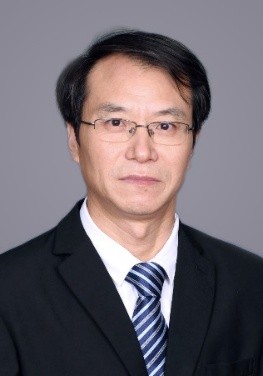
Prof. Yiliang He
China-UK International Low Carbon College, Shanghai Jiao Tong UniversitySchool of Environmental Science and Engineering, Shanghai Jiao Tong University
Speech Title:
Biography: Prof. Yiliang He is the associate dean of China-UK International Low Carbon College and a full Professor of School of Environmental Science and Engineering, Shanghai Jiao Tong University. He was a visiting scholar at Gifu University in Japan in 2003, a visiting professor at the Georgia Institute of Technology in the United States in 2006, and a guest professor at the National University of Singapore from 2013 to 2025. He is a leading talent in Minhang District, Shanghai, and a thematic expert for the National Major Science and Technology Special Project on Water. He has long been engaged in teaching, research, and engineering practice in the field of environmental engineering. He has published over a hundred papers in top academic journals at home and abroad and at important international conferences such as the annual meeting of the International Water Association, and has compiled and published two academic monographs. As the project leader, he has presided over two research projects of the National Major Science and Technology Special Project on "Water Pollution Control and Treatment" during the "11th Five-Year Plan" and "12th Five-Year Plan" periods. As the project principal, he has successively undertaken six projects funded by the National Natural Science Foundation of China. As the chief PI, he is responsible for the research of the E2S2 project under the CREATE major international cooperation project of the Singapore government.
Research interests: Water pollution control and water environment restoration, environmental behavior of emerging pollutants, and environmentally friendly purification technologies.