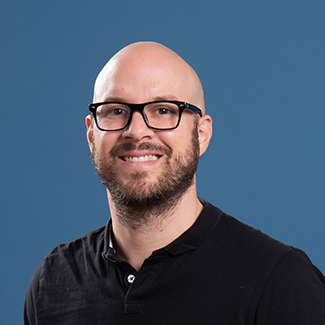
Prof. Jérémy Masbou
Associate Professor, National School for Water and Environmental Engineering of Strasbourg (ENGEES)Researcher, Institut Terre et Environnement de Strasbourg, University of Strasbourg-CNRS-ENGEES
Speech Title: Beyond Concentration Measurements: New Perspectives for Monitoring Emerging Contaminants in Dynamic Urban Waters
Abstract: Monitoring emerging contaminants in aquatic environments increasingly requires approaches that go beyond concentration measurements alone. This is particularly true in dynamic urban water systems, where contaminant occurrence can vary rapidly and where complex mixtures, transformation processes and changing environmental conditions complicate the interpretation of conventional targeted measurements. Moving from simple detection toward a better understanding of contaminant sources, persistence and transformation therefore requires complementary analytical perspectives.
Stable isotope analysis provides such a process-oriented perspective by tracking changes in the isotopic composition of contaminants during transformation. Examples from pesticide and pharmaceutical studies show how isotope fractionation can help identify degradation pathways and distinguish between processes that may produce similar concentration trends or transformation products. For the antibiotic sulfamethoxazole, the combination of carbon and nitrogen isotope measurements with controlled photochemical and sediment-water experiments revealed the strong influence of environmental conditions on contaminant persistence and transformation. Characterization of aquatic organic matter using optical indices and fluorescence-based approaches provides complementary information on the environmental matrix and its evolution, helping to place contaminant behaviour within its broader biogeochemical context.
High-resolution mass spectrometry adds another dimension by extending monitoring beyond predefined target compounds. Suspect and non-target screening can reveal metabolites, transformation products and previously overlooked chemical signals, providing a broader view of contaminant dynamics and complementing isotope-based interpretation. Together, these approaches can help bridge the gap between identifying what is present and understanding the processes that control its evolution.
Finally, translating such analytical strategies to highly variable field conditions remains challenging. Emerging smart-monitoring approaches, including automated and event-responsive sampling platforms such as the developing FLOWSCANNER smart system, may help improve the temporal resolution of environmental observations and better connect advanced chemical analyses with short-lived contamination events.
By combining isotope tracing, characterization of the environmental matrix, non-target screening and improved sampling strategies, environmental monitoring can progressively move beyond contaminant detection alone toward a more process-informed understanding of contaminant occurrence, sources, transformation and fate in urban aquatic systems. These approaches are now being extended to illicit drugs and their metabolites, for which highly variable inputs, complex transformation pathways and mixed sources make conventional monitoring particularly challenging. Combining event-responsive sampling, high-resolution mass spectrometry and isotope-based information may provide new opportunities to better characterize their occurrence, sources and fate in urban waters.
Biography: Dr. Jérémy Masbou is an Associate Professor at the National School for Water and Environmental Engineering of Strasbourg (ENGEES), France, and a researcher at the Institut Terre et Environnement de Strasbourg (ITES, UMR 7063, University of Strasbourg-CNRS-ENGEES). His research focuses on innovative monitoring strategies for emerging contaminants in aquatic environments, with particular emphasis on urban water quality, illicit drugs, pesticides, and microplastics. He develops advanced environmental monitoring approaches combining automated high-frequency sampling, wastewater-based epidemiology, compound-specific isotope analysis, and state-of-the-art analytical chemistry to better understand pollutant sources, transport, and transformation. His work aims to support sustainable water resource management and evidence-based environmental decision-making. He has coordinated and contributed to several national and international research projects dedicated to urban water monitoring, contaminant source tracking, and the development of innovative tools for water quality assessment.