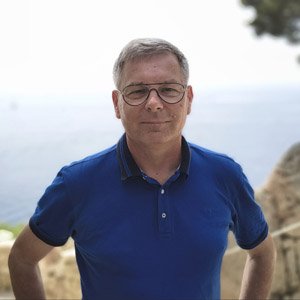
Prof. Tymon Zielinski
Head - CORE-Climate and Ocean Research and Education UnitInstitute of Oceanology Polish Academy of Sciences
Speech Title: Ocean and society: From scientific knowledge to societal engagement to strengthen effective science-decision making interface
Abstract: Strengthening global understanding of the variety of services ocean provides, as well as the impact humans have on the ocean is vital to support the development and further implementation of effective decision making and thus in the process of achieving the sustainability targets of the Agenda 2030 for Sustainable Development. It is also important to influence our daily decisions, hence behavioural change, which are necessary for achieving the future sustainability. It requires changes on every level of daily activities, from individual choices to decision making processes. The shift in the decision making and policy creation processes to the level where the ocean and its services are acknowledged at every stage, requires universal understanding across all aspects, from ecological to societal. Multidisciplinary approaches, tools and strategies are needed, and they must be tailored to individuals, sectors and regions that incorporate many disciplines, methods and technologies. It is especially crucial for coastal areas, which are at the front of the planetary environmental and societal change due to a variety of climate change and hence societal related pressures. Therefore, the development of robust, transparent, and transferable approaches for combining all types of knowledge is essential for achieving sustainable coastal management and informing conservation and spatial planning decisions. In this talk, using the most up-to-date findings of the UN World Ocean Assessment III, I describe the key ocean and related societal issues and then I present practical lessons learned during the development and application of the Ecological Evaluation Tool within the EU MARBEFES project. I further outline recommendations for improving future interdisciplinary assessment methods. Therefore, this talk demonstrates how environmental and social knowledge can be brought together to support ecosystem-based management while highlighting the scientific and technical barriers that still limit effective integration.